






How Will Berlin Heat Its Buildings in 2045? Data as the Foundation for the Heat Transition

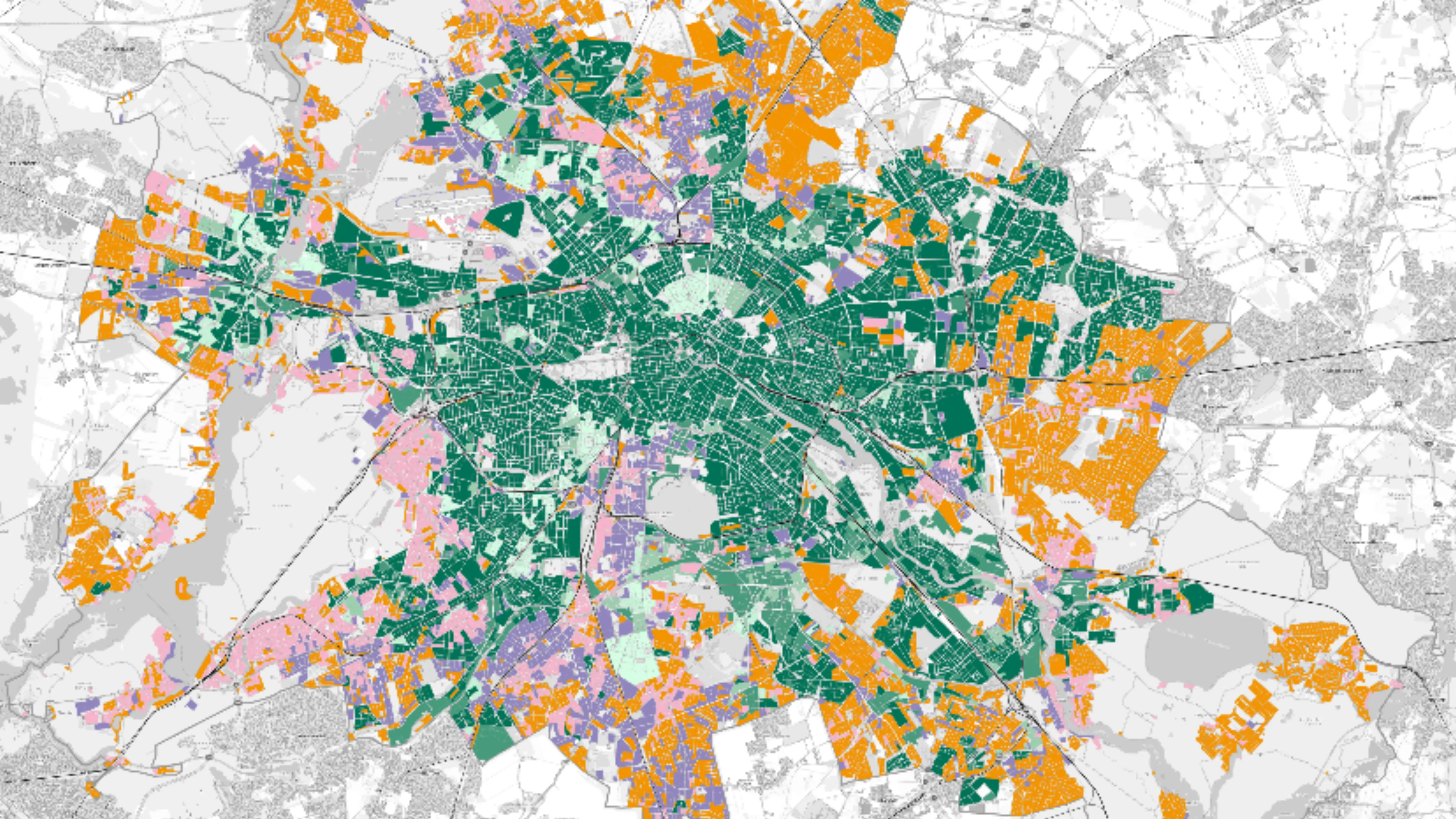
Berlin Heat Atlas: A data foundation for the city’s heat transition
How will Berlin be supplied with heat in the future? What role will heating networks, decentralised solutions and renewable energy play? And what potential exists in the different areas of the capital? The Berlin Heat Atlas provides a comprehensive data foundation for answering these questions.
On 29 June, Berlin’s municipal heat planning will be presented to the public – an important milestone for the capital’s heat transition.
As a working consortium comprising Scalian Germany, Reiner Lemoine Institut gGmbH, Hypertegrity AG and conenergy consult gmbh, we were commissioned by the Berlin Senate Department for Mobility, Transport, Climate Protection and the Environment (SenMVKU) to create the technical and substantive foundation: the Berlin Heat Atlas.
The objective is to bring together existing information on buildings, heat consumption, networks and local potential and make it usable for municipal heat planning in the form of maps and analyses.
A shared data foundation for heat planning
Reliable heat planning first requires the most accurate possible picture of the status quo. Which buildings exist? How are they currently heated? How high is heat demand? Which network infrastructures are already in place? And which local sources can be used for a climate-neutral heat supply in the future?
The Heat Atlas brings the relevant data sources together in a structured database. Information on buildings, heating systems, networks and potential can therefore be viewed jointly and related to one another.
This turns many different data points into a foundation that enables Berlin’s heat supply to be analysed and developed further with spatial differentiation.
From different data sources to one central system
Technically, the Heat Atlas is based on the Urban Data Space platform. Automated ETL processes integrate, process and centrally store data from different sources. ETL stands for Extract, Transform, Load: data is extracted from its respective sources, prepared for further use and then combined in a common data structure.
The result is not a static snapshot that merely documents conditions at a specific point in time. The technical architecture enables continuous data integration and updating. The Heat Atlas is therefore designed as an updatable instrument that can also incorporate future developments.
Maps and analyses make complex data usable
The mere availability of data is not enough for effective heat planning. What matters is turning that data into usable information for concrete decisions.
A central component of the Heat Atlas is therefore the differentiated mapping of heat supply. Spatial visualisation makes structures, relationships and potential visible and enables specific areas of the city to be examined in detail.
The maps are complemented by corresponding data analyses. Existing information can therefore not only be documented, but also used as a sound basis for municipal heat planning.
From the current situation to 2045
The Heat Atlas does not only examine the current state of Berlin’s heat supply.
Based on the integrated data, future scenarios up to 2045 can also be modelled. These include the future development of heat demand, heating networks and renewable energy potential.
This makes it possible to examine the central question of municipal heat planning on a data-driven basis: How can Berlin’s heat supply develop on the path towards a climate-neutral future? The Heat Atlas provides the technical and analytical foundation for modelling different developments and deriving options for action.
Heat planning as a continuous management process
The scope of the Heat Atlas covers five core areas:
- Data integration: linking relevant data sources
- Data storage: a structured database for buildings, heating systems, networks and potential
- Map visualisation: differentiated representation of heat supply
- Data analysis: a sound basis for municipal decisions
- Future scenarios up to 2045: analysing the development of demand, networks and renewable energy potential
Heat planning therefore evolves from a one-off concept into a continuous management process.
An updatable data foundation makes it possible to incorporate changes, develop plans further and feed new findings into future decisions.
Advancing Berlin’s heat transition together
The work does not end with the presentation of municipal heat planning.
In the next step, the Heat Atlas will be made available to a broader group of specialist stakeholders. This will allow the existing information and analyses to be used more widely and support joint implementation on the ground.
For Scalian Germany, the project also demonstrates the importance of combining data integration, technological infrastructure and specialist analysis in complex transformation programmes.
The heat transition requires more than ambitious goals. It requires a robust data foundation that makes it possible to plan, evaluate and continuously develop the path towards those goals.
A big thank you to everyone involved in the consortium and to the Senate Department for Mobility, Transport, Climate Protection and the Environment for their trust and collaboration.